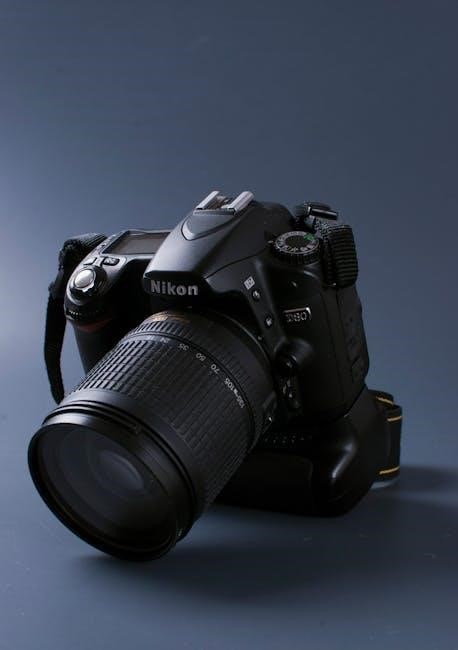
Discover the Nikon D70S through freely available manuals on the Internet Archive, offering PDF downloads, JP2 ZIPs, and torrent options for comprehensive guidance.
Overview of the Nikon D70S
The Nikon D70S, a digital SLR, gains accessibility through readily available user manuals online. Resources like the Internet Archive provide multiple formats – PDF, single-page processed JP2 ZIP, and even torrent downloads – catering to diverse user preferences. These manuals, uploaded by contributors like chris85 in June 2021 and July 2020, aim to guide new owners.
Specifically, these resources are designed to help users understand their newly unboxed camera, offering a thorough exploration of its features and functionalities. They serve as a valuable starting point for mastering the D70S.
Key Features and Specifications
While the provided text focuses on accessing the Nikon D70S instruction manual, it doesn’t detail the camera’s specifications. However, the availability of comprehensive manuals – in formats like PDF, JP2 ZIP, and torrents via the Internet Archive – suggests a detailed exploration of these features within.
Users can expect these manuals to cover aspects like sensor resolution, autofocus points, and shooting modes. The uploaded resources from contributors like chris85 promise a thorough understanding of the D70S’s capabilities, enabling optimal usage.

Getting Started with Your D70S
Begin your journey with the Nikon D70S by downloading the user manual from the Internet Archive for a guided setup experience.
Unboxing and Initial Setup
Carefully unpack your Nikon D70S, ensuring all components are present. The Internet Archive provides downloadable manuals to guide you through this crucial first step. Familiarize yourself with the camera’s exterior, noting the location of key buttons and ports. Before powering on, consult the manual for a detailed checklist of included accessories. Proper initial setup, as detailed in the freely available guides, is vital for optimal performance. This includes registering your camera and potentially downloading any available firmware updates, enhancing functionality and stability. A thorough review of the manual will streamline this process.
Inserting the Battery and Memory Card
Locate the battery compartment, typically found at the bottom of the Nikon D70S. Consult the downloadable manual from resources like the Internet Archive for precise instructions and diagrams. Ensure correct battery polarity when inserting the battery pack. Next, identify the memory card slot, usually alongside the battery compartment. Gently insert a compatible memory card (CompactFlash) until it clicks into place. Avoid forcing the card. The user manual details supported card types and capacities. Proper insertion ensures reliable image storage and camera operation, as outlined in the freely accessible guides.
Understanding the Camera Controls
Familiarize yourself with the Nikon D70S controls using the freely available instruction manual found on platforms like the Internet Archive. Key controls include the mode dial, shutter button, and control dials. The manual details each button’s function, including menu navigation and quick settings access. Learn the purpose of the autofocus point selection and exposure compensation controls. Understanding these elements, as detailed in the downloadable guides, is crucial for mastering the camera’s functionality and achieving desired photographic results. Proper control knowledge unlocks the D70S’s full potential.

Shooting Modes Explained
Explore the Nikon D70S shooting modes – Auto, Program, Aperture-Priority, Shutter-Priority, and Manual – detailed within the freely accessible instruction manual online.
Auto Mode and Scene Modes
The Nikon D70S simplifies photography with its Auto mode, intelligently selecting settings for various conditions. For more control, utilize Scene modes – Portrait, Landscape, Close-up, Sports, and Night Portrait – each optimized for specific subjects.
These pre-configured settings adjust white balance, exposure, and other parameters, ensuring optimal results without manual adjustments. The instruction manual details each Scene mode’s function, helping users quickly capture stunning images in diverse scenarios. Understanding these modes is crucial for beginners seeking immediate, high-quality photographs, while still offering a stepping stone towards more advanced techniques.
Program Auto (P) Mode
Program Auto (P) mode on the Nikon D70S offers a balance between convenience and control. The camera automatically sets the aperture and shutter speed, but allows the photographer to adjust ISO, white balance, and exposure compensation.
This mode is ideal for situations where you want the camera to handle the technical aspects while retaining creative input. The instruction manual emphasizes P mode’s versatility, enabling quick adjustments without fully committing to manual settings. It’s a great stepping stone for those transitioning from Auto modes, fostering a deeper understanding of photographic principles.
Aperture-Priority (A) Mode
Aperture-Priority (A) mode on the Nikon D70S empowers photographers to control depth of field. You select the desired aperture (f-stop), and the camera automatically determines the appropriate shutter speed for correct exposure.
The instruction manual highlights A mode’s usefulness for portraits (shallow depth of field) and landscapes (large depth of field). It’s a powerful tool for creative expression, allowing manipulation of focus areas. Understanding the relationship between aperture and shutter speed is key, and the manual provides guidance on achieving desired results in various lighting conditions.
Shutter-Priority (S) Mode
Shutter-Priority (S) mode on the Nikon D70S grants control over motion blur and freezing action. The photographer sets the shutter speed, and the camera calculates the corresponding aperture for proper exposure.
The instruction manual details S mode’s effectiveness for sports (fast shutter speed to freeze action) and capturing motion blur (slow shutter speed for artistic effects). It emphasizes the importance of considering aperture’s impact on depth of field. Mastering S mode requires understanding how shutter speed affects image brightness and clarity, as explained within the user guide.
Manual (M) Mode
Manual (M) mode on the Nikon D70S provides complete creative control, allowing photographers to independently set both aperture and shutter speed. The instruction manual highlights this mode’s suitability for challenging lighting conditions or when precise exposure control is crucial.
It details how to use the camera’s light meter to achieve proper exposure, emphasizing the interplay between aperture, shutter speed, and ISO. Mastering M mode, as the manual explains, requires practice and a solid understanding of photographic principles, offering ultimate artistic freedom.

Focusing and Metering
Explore autofocus modes and metering options within the Nikon D70S instruction manual, crucial for achieving sharp, properly exposed images in diverse scenarios.
Autofocus Modes and Settings
The Nikon D70S offers a variety of autofocus (AF) modes to suit different shooting situations. Understanding these settings, detailed within the instruction manual, is key to capturing sharp images. Single-servo AF (AF-S) is ideal for stationary subjects, while continuous-servo AF (AF-C) excels with moving subjects, continuously tracking focus.
AF-area mode selection allows you to choose how the camera selects focus points. Options include single-area AF, dynamic-area AF (with varying numbers of focus points), and auto-area AF. The manual explains how to customize these settings for precise control. Explore focus lock and focus priority options to fine-tune the AF system to your preferences and shooting style for optimal results.
Metering Modes and Exposure Compensation
The Nikon D70S provides several metering modes to accurately measure light and determine exposure. Matrix metering evaluates the entire scene, while center-weighted metering prioritizes the center of the frame. Spot metering measures light from a very small area, useful for challenging lighting.
Exposure compensation allows you to override the camera’s suggested exposure, brightening or darkening the image as needed. The instruction manual details how to adjust this setting, crucial for situations like backlit subjects or snow scenes. Understanding these modes, and utilizing exposure compensation, ensures properly exposed photographs in diverse conditions.

Navigating the Menu System
Explore the D70S’s menu for customization; the manual guides users through options, enabling personalized settings for optimal photographic control and camera functionality.
Customizing Camera Settings
The Nikon D70S allows for extensive personalization through its menu system. Users can tailor settings to match their shooting style and preferences, enhancing the overall photographic experience.
Accessing the menu provides control over image quality, autofocus behavior, metering modes, and various system functions.
Detailed instructions within the downloadable manual explain each setting, clarifying its impact on image capture.
Adjustments can be made to white balance, picture control, and other parameters, ensuring optimal results in diverse lighting conditions.
Furthermore, the manual assists in configuring custom functions for quicker access to frequently used features, streamlining workflow.
Understanding Menu Options
The Nikon D70S menu system is logically organized into several categories, simplifying navigation and setting adjustments. The freely available instruction manual details each option comprehensively.
Users will find sections dedicated to shooting settings, custom settings, setup, and retouching. Each category contains numerous sub-menus with specific controls.
The manual clarifies the function of each menu item, explaining how it affects image capture and camera operation.
Understanding these options is crucial for maximizing the D70S’s capabilities and achieving desired photographic results.
Referencing the manual ensures users can confidently navigate and utilize the full potential of the camera’s features.
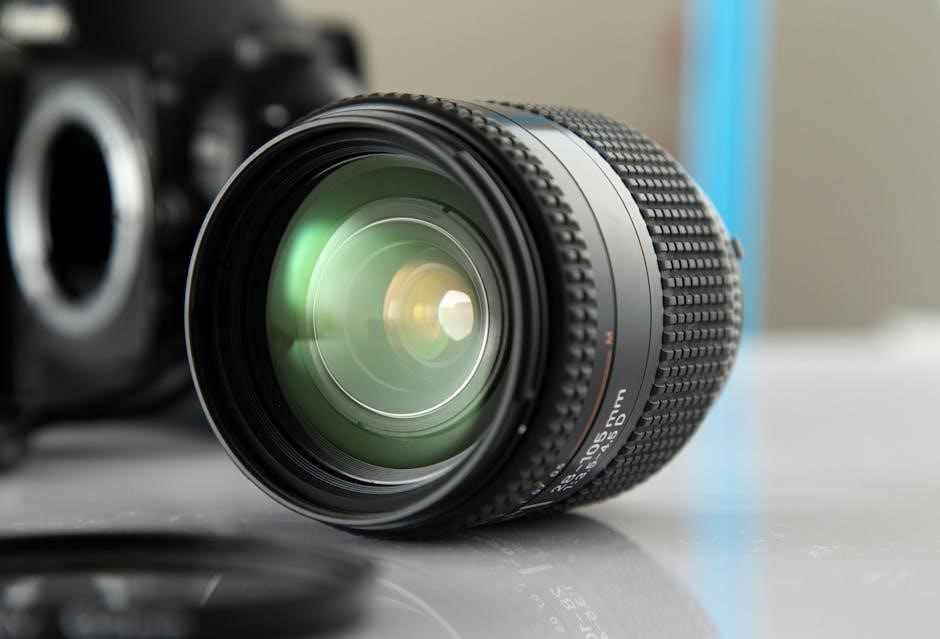
Image Quality and Settings
Explore the Nikon D70S manual for detailed guidance on image size, quality options, and white balance settings to optimize your photographs effectively.
Image Size and Quality Options
The Nikon D70S offers a range of image size and quality settings, crucial for balancing file size and detail. Understanding these options, detailed within the instruction manual, allows photographers to tailor output to their specific needs.
You can select from various resolutions, impacting the number of megapixels used per image. Higher resolutions yield larger files suitable for printing, while lower resolutions are ideal for web use or email sharing.
Quality settings, typically represented as Fine, Normal, or Basic, determine the level of JPEG compression applied. Fine provides the highest quality with the largest file size, while Basic offers the smallest file size with some loss of detail. RAW format is also available for maximum editing flexibility.
White Balance Settings
Achieving accurate color rendition is vital, and the Nikon D70S instruction manual details its white balance settings. These settings compensate for different lighting conditions, ensuring colors appear natural in your photographs.
Preset modes like Daylight, Cloudy, Fluorescent, and Tungsten cater to common scenarios. A Custom White Balance option allows you to manually set the white point using a gray card or white object for precise color correction.
The Auto White Balance (AWB) function attempts to determine the correct white balance automatically, but manual control often yields superior results, especially in challenging lighting. Understanding these settings is key to consistent and accurate color.

Using the Built-in Flash
The Nikon D70S manual explains flash modes and settings, including auto, fill-flash, and manual control, for optimal illumination in various shooting situations.
Flash Modes and Settings
The Nikon D70S offers a versatile built-in flash with several modes to suit diverse photographic needs. Auto mode lets the camera determine when flash is needed, while Auto with Red-Eye Reduction minimizes red-eye effects in portraits.
Fill-flash adds light to shadowed areas, even in bright conditions, and Slow Sync balances flash with slower shutter speeds for ambient light inclusion. Manual mode provides full control over flash power. The manual details how to access these settings through the camera’s menu system, allowing photographers to fine-tune flash output for creative effects and optimal image exposure. Understanding these modes is crucial for mastering the D70S’s flash capabilities.
Flash Compensation
Flash compensation on the Nikon D70S allows photographers to fine-tune the flash output, overriding the camera’s automatic settings. This is particularly useful when the automatically determined flash level results in over or underexposed images.
The manual explains how to adjust flash compensation in increments, typically ranging from -3 to +3 EV, providing precise control over brightness. Positive values increase flash power, brightening the image, while negative values decrease it. Mastering flash compensation ensures properly exposed photographs in challenging lighting conditions, offering creative control beyond automatic modes.

Reviewing and Deleting Images
Playback mode enables image review with zoom functionality, while the manual details straightforward procedures for deleting unwanted images from the memory card efficiently.
Playback Mode and Zoom Function
Entering playback mode allows you to review captured images directly on the D70S’s LCD screen. This is typically achieved by pressing a dedicated playback button on the camera’s rear panel. Once in playback mode, you can navigate through your photos using the multi-selector or the main command dial.
The zoom function is crucial for detailed image inspection. By using the zoom control (often the wide-angle side of the zoom lever), you can magnify portions of the image to check for sharpness and focus. The manual likely details different zoom steps, allowing for varying levels of magnification. This feature is invaluable for critically assessing image quality immediately after capture, ensuring you’ve achieved the desired results.
Deleting Images from the Memory Card
Deleting unwanted images from your Nikon D70S’s memory card is straightforward, but requires careful attention to avoid accidental loss of valuable photos. Typically, within playback mode, a delete option is accessed via the menu system or a dedicated button press. The camera usually prompts for confirmation before permanently erasing files.
Be aware of deletion options; you can delete single images, select a range, or delete all images on the card. The manual will detail these procedures. Always double-check your selections before confirming deletion, as deleted files are often unrecoverable. Regular deletion frees up space for new photos!

Connecting to a Computer
Transfer images easily using a USB cable and Nikon Transfer software, readily available for download, facilitating seamless photo management on your computer.
Transferring Images via USB
Connecting your Nikon D70S to a computer via USB is a straightforward process for image transfer. First, ensure your camera is powered off, then connect the USB cable to both the camera and your computer. Power on the camera; a connection prompt should appear on the LCD screen.
Select the option to transfer images. Your computer should recognize the camera as a removable drive. You can then browse the DCIM folder to locate your photos and videos. Alternatively, utilize Nikon’s dedicated transfer software for a more organized and efficient transfer experience, allowing for image selection and folder destination choices.
Using Nikon Transfer Software
Nikon Transfer is a valuable tool for seamlessly importing images from your D70S to your computer. Download and install the software from Nikon’s official website. Once installed, connect your camera via USB as described previously. Launch Nikon Transfer, and it should automatically detect your D70S.
The software provides a user-friendly interface for selecting specific images or transferring all photos at once. You can also choose the destination folder on your computer. Nikon Transfer often includes basic image editing features and organizational tools, streamlining your workflow beyond simple file copying.
Troubleshooting Common Issues
Resolve camera problems by checking for error messages and solutions within the Nikon D70S manual, alongside guidance for basic camera maintenance procedures.
Error Messages and Solutions
Encountering an error message on your Nikon D70S can be concerning, but often easily resolved. The comprehensive instruction manual details various error codes and their corresponding solutions. Common issues might include card errors, indicating a problem with the memory card itself – try reformatting or using a different card.
Other messages could relate to lens compatibility or internal camera errors. The manual provides step-by-step troubleshooting, suggesting actions like resetting the camera to factory defaults or contacting Nikon support if the problem persists. Always consult the manual first before attempting complex fixes, ensuring you don’t void any warranty.
Basic Camera Maintenance
Maintaining your Nikon D70S ensures its longevity and optimal performance. The instruction manual emphasizes regular cleaning of the sensor, using a blower to remove dust particles – avoid touching it directly. Periodically check and clean the viewfinder and LCD screen with a soft, lint-free cloth.
Proper battery storage is crucial; remove the battery if the camera won’t be used for extended periods. The manual also advises protecting the camera from extreme temperatures and humidity. Regularly inspect the camera body and lens mount for any physical damage, addressing issues promptly to prevent further complications.