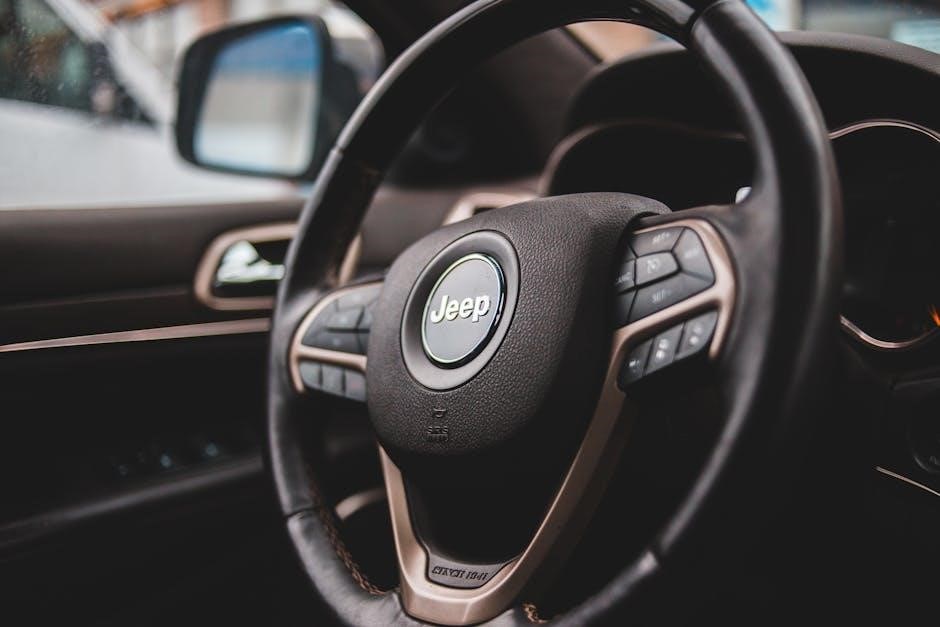
This manual is a crucial resource detailing operation, features, maintenance, and safety for your 2012 Jeep Grand Cherokee, promoting responsible driving habits.
Overview of the Vehicle
The 2012 Jeep Grand Cherokee represents a significant blend of luxury, capability, and technology within the mid-size SUV segment. It offers a range of engines, including V6 and V8 options, catering to diverse driving needs and preferences; Known for its robust four-wheel-drive systems – like Selec-Terrain – the Grand Cherokee excels both on and off-road.
Inside, the vehicle provides a comfortable and well-appointed cabin with available premium materials and advanced features. Safety is a key component, with a comprehensive suite of airbags and driver-assistance technologies. Understanding this vehicle’s capabilities and features, as detailed in the owner’s manual, is paramount for a safe and enjoyable ownership experience.
Importance of the Owner’s Manual
Your 2012 Jeep Grand Cherokee owner’s manual is far more than just a collection of pages; it’s a vital guide to maximizing your vehicle’s potential and ensuring your safety. It provides essential information regarding operation, maintenance schedules, and crucial safety warnings that directly impact your driving experience.
Familiarizing yourself with the manual’s contents helps prevent potential issues, understand warning lights, and perform basic maintenance tasks. Ignoring the guidance within can lead to improper vehicle operation, costly repairs, and potentially dangerous situations. Prioritizing a review of this manual is a cornerstone of responsible vehicle ownership.

Understanding Your 2012 Jeep Grand Cherokee
This section details key aspects of your vehicle, including the Vehicle Identification Number (VIN) and a comprehensive overview of its features and specifications.
Vehicle Identification Number (VIN) and Decoding
The Vehicle Identification Number (VIN) is a unique 17-character code crucial for identifying your specific 2012 Jeep Grand Cherokee. Located on the driver’s side dashboard near the windshield, and often on vehicle registration documents, it provides a wealth of information.
Decoding the VIN reveals details about the vehicle’s origin, manufacturing plant, engine type, model year, and assembly date. Understanding your VIN is essential for tracking vehicle history, warranty claims, and potential recalls. Online VIN decoder tools are readily available to translate this code into easily understandable information, assisting with service and identification purposes. Accurate VIN information ensures correct parts ordering and service procedures.
Key Features and Specifications
The 2012 Jeep Grand Cherokee boasts a range of features designed for both on and off-road capability. Standard features include a powerful engine, available in several configurations, and a comfortable, well-appointed interior. Key specifications vary by trim level, encompassing options like leather seating, advanced audio systems, and navigation.
Notable features include the Selec-Terrain™ system for optimized traction, a luxurious interior with available premium materials, and advanced safety technologies. Engine options typically include a V6 and V8, offering varying horsepower and torque outputs. Understanding these specifications is vital for maximizing your driving experience and maintaining optimal performance.

Operating Your 2012 Jeep Grand Cherokee

Mastering your vehicle requires understanding starting/stopping, driving modes like Selec-Terrain, and interpreting the instrument panel for a safe, enjoyable ride.
Starting and Stopping Procedures
Proper starting procedures for your 2012 Jeep Grand Cherokee involve ensuring the vehicle is in Park or Neutral, applying the foot brake firmly, and turning the ignition key to the start position. Release the key once the engine starts. Avoid prolonged cranking to prevent starter damage.
When stopping, gently apply the brake pedal to achieve a smooth and controlled deceleration. Ensure the vehicle comes to a complete stop before shifting into Park. Always engage the parking brake, especially on inclines, to prevent unintended movement. Familiarize yourself with the location and operation of the emergency brake for added safety.
Remember to turn off all accessories before shutting down the engine to conserve battery power. Following these procedures ensures safe and efficient operation of your Grand Cherokee.
Driving Modes and Systems (e.g., Selec-Terrain)
The 2012 Jeep Grand Cherokee features advanced driving systems, notably the Selec-Terrain system. This allows drivers to optimize vehicle performance for various conditions. Modes include Auto, Snow, Sport, and Rock, adjusting traction control and suspension settings accordingly.
Auto mode is suitable for everyday driving, while Snow mode enhances stability on slippery surfaces. Sport mode sharpens throttle response and steering feel for a more engaging experience. Rock mode maximizes off-road capability by providing increased wheel articulation and traction.

Understanding each mode’s function is crucial for safe and effective driving. Refer to the owner’s manual for detailed explanations and recommended usage scenarios for each Selec-Terrain setting.
Understanding the Instrument Panel
The 2012 Jeep Grand Cherokee’s instrument panel provides vital information at a glance. Key indicators include speedometer, tachometer, fuel level, and engine temperature. Warning lights alert drivers to potential issues, requiring immediate attention.
The Electronic Vehicle Information Center (EVIC), typically located within the instrument cluster, displays customizable data like trip mileage, average fuel economy, and tire pressure. Familiarize yourself with the EVIC’s menu navigation to access these features.
Pay close attention to illuminated warning lights, consulting the owner’s manual for specific meanings and recommended actions. Ignoring these signals could lead to vehicle damage or unsafe driving conditions. Regular monitoring ensures optimal vehicle performance.

Maintenance and Care
Regular maintenance, as outlined in the manual, is essential for preserving the 2012 Grand Cherokee’s reliability and ensuring long-term optimal performance.
Recommended Maintenance Schedule
The 2012 Jeep Grand Cherokee’s longevity hinges on adhering to a strict maintenance schedule, detailed within the owner’s manual. This schedule outlines intervals for crucial checks and services, categorized by mileage or time, whichever comes first.
Essential services include regular oil and filter changes, tire rotations, fluid level inspections (coolant, brake, power steering, transmission), and brake pad/rotor assessments. The manual also specifies intervals for replacing air filters, fuel filters, and spark plugs.
Furthermore, it details more extensive services required at higher mileage intervals, such as coolant flushes, transmission fluid changes, and differential service. Following this schedule proactively prevents costly repairs and maintains peak vehicle performance, ensuring a safe and reliable driving experience.
Fluid Checks and Replacements
Maintaining proper fluid levels is paramount for the 2012 Jeep Grand Cherokee’s optimal function. The owner’s manual provides detailed instructions for checking essential fluids like engine oil, coolant, brake fluid, power steering fluid, transmission fluid, and windshield washer fluid.
Regular inspection allows for early detection of leaks or low levels, preventing potential damage. Replacement intervals vary based on driving conditions and fluid type. The manual specifies recommended fluids and change frequencies.
Using the correct fluids is critical; incorrect fluids can compromise performance and void warranties. Proper disposal of used fluids is also emphasized, adhering to environmental regulations. Consistent fluid maintenance contributes significantly to the vehicle’s reliability and longevity.
Tire Information and Maintenance
The 2012 Jeep Grand Cherokee’s tire section details proper tire sizes, load ratings, and speed ratings for optimal performance and safety. Maintaining correct tire pressure, as indicated on the vehicle’s tire placard, is crucial for even wear and fuel efficiency.
Regular tire inspections should check for tread depth, uneven wear patterns, and any signs of damage like cuts or bulges. The manual outlines recommended tire rotation schedules to promote even wear and extend tire life.
Proper tire maintenance also includes balancing and alignment services. Understanding tire sidewall markings and seasonal tire considerations (winter tires, if applicable) are also covered, ensuring safe and reliable operation in all conditions.
Safety Features and Operation
This section comprehensively explains the 2012 Grand Cherokee’s safety systems, including airbags, seatbelts, and emergency features, for occupant protection.
Airbag System Details
The 2012 Jeep Grand Cherokee is equipped with an advanced airbag system designed to provide occupant protection during various collision scenarios. This system includes front airbags for both driver and passenger, side-curtain airbags for front and rear outboard occupants, and potentially seat-mounted side airbags.
Understanding the system’s operation is vital; airbags deploy rapidly and with significant force. Proper seatbelt usage is always required for optimal airbag effectiveness. The manual details airbag locations, deployment indicators, and important safety precautions. It also outlines situations where airbags may not deploy, such as low-speed impacts or certain types of collisions. Always heed the warnings regarding airbag deactivation or modifications, as these can compromise safety.
Seatbelt Usage and Child Restraints
Proper seatbelt use is paramount for all occupants of the 2012 Jeep Grand Cherokee, significantly reducing the risk of injury during a collision. The owner’s manual emphasizes that seatbelts should be correctly positioned and fastened on every trip, regardless of distance.
Regarding child restraints, the manual provides detailed guidance on selecting and installing appropriate safety seats based on the child’s age, weight, and height. It outlines the proper use of LATCH (Lower Anchors and Tethers for Children) and the importance of securing the restraint according to manufacturer instructions. Never place a rear-facing infant seat in front of an active airbag. The manual stresses adhering to all local laws and regulations concerning child passenger safety.
Emergency Assistance Features
The 2012 Jeep Grand Cherokee is equipped with several features designed to provide assistance in emergency situations. Uconnect, if equipped, may offer emergency call functionality, automatically connecting occupants with emergency services in the event of a severe collision.

The manual details the operation of the hazard lights and the location of the emergency release for the hood. It also explains how to properly use the parking brake in an emergency. Furthermore, it stresses the importance of knowing your vehicle’s location and being able to clearly communicate your situation to emergency responders. Familiarizing yourself with these features before an emergency occurs is strongly advised for all drivers and passengers.

Troubleshooting Common Issues
This section guides owners through basic diagnostics and explains common warning lights, helping to identify and address minor problems with their 2012 Grand Cherokee.
Basic Diagnostic Procedures
When encountering an issue with your 2012 Jeep Grand Cherokee, begin with a visual inspection – check for leaks, loose connections, or damaged components. Listen carefully for unusual noises during operation, noting when they occur. Utilize the vehicle’s onboard diagnostic (OBD) system; a scan tool can retrieve trouble codes providing valuable clues.
Consult the manual for code definitions and potential causes. Simple checks like verifying fluid levels (oil, coolant, brake fluid) and inspecting fuses are often effective first steps. Document all observations and actions taken. If the problem persists, or involves safety-critical systems, seeking professional assistance from a qualified mechanic is highly recommended. Remember, attempting complex repairs without proper knowledge can cause further damage.
Common Warning Lights Explained
The 2012 Jeep Grand Cherokee utilizes various warning lights to alert drivers to potential issues. The Check Engine Light indicates a problem with the engine or emissions system – requiring a scan for trouble codes. A flashing Check Engine Light signals a severe issue needing immediate attention.
The ABS light illuminates if there’s a problem with the anti-lock braking system. The Airbag light signifies an issue with the airbag system, compromising safety. Low Tire Pressure is indicated by a specific symbol, prompting tire inflation checks. Oil Pressure and Temperature lights warn of engine lubrication or overheating problems. Refer to your owner’s manual for a complete list and detailed explanations of each warning light, and appropriate actions to take.
Detailed Component Information
This section provides in-depth specifications and operational details regarding the 2012 Jeep Grand Cherokee’s engine and transmission systems for informed understanding.
Engine Specifications and Operation
The 2012 Jeep Grand Cherokee offered several engine options, including a 3.6L Pentastar V6 and various V8 engines like the 5.7L HEMI. Understanding your specific engine is vital for proper maintenance.
The Pentastar V6 delivers a balance of power and fuel efficiency, while the HEMI V8 provides enhanced towing capacity and performance. This manual details each engine’s displacement, horsepower, torque, and recommended fuel type.
Operationally, the manual explains the engine’s key components, like the fuel injection system, ignition system, and cooling system. It also covers essential procedures such as oil changes and spark plug replacements, ensuring optimal engine health and longevity. Proper understanding of these systems contributes to a safe and reliable driving experience.
Transmission Information (Manual Transmission Specifics)
Notably, the 2012 Jeep Grand Cherokee primarily featured automatic transmissions; a manual transmission option was not standard or widely available for this model year in most markets. However, this section addresses potential aftermarket conversions or rare factory configurations.
If equipped with a manual transmission, this manual details its specific operation, including proper shifting techniques to maximize fuel efficiency and minimize wear. It covers clutch adjustment, gear ratios, and potential troubleshooting steps for common issues like slipping or grinding.
Maintenance specifics for a manual transmission include fluid checks and replacements, as well as inspection of the clutch components. Understanding these details is crucial for maintaining the transmission’s performance and preventing costly repairs.