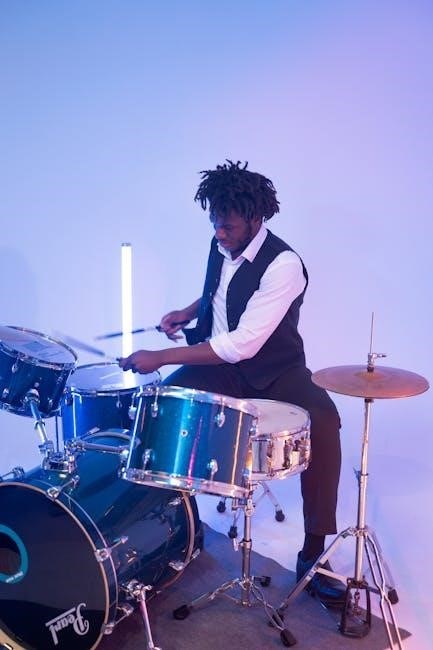
Embark on your drumming journey! Online resources and free games simplify learning. Explore virtual kits‚ understand rhythm‚ and discover percussion fundamentals with ease.
What is a Drum Kit?
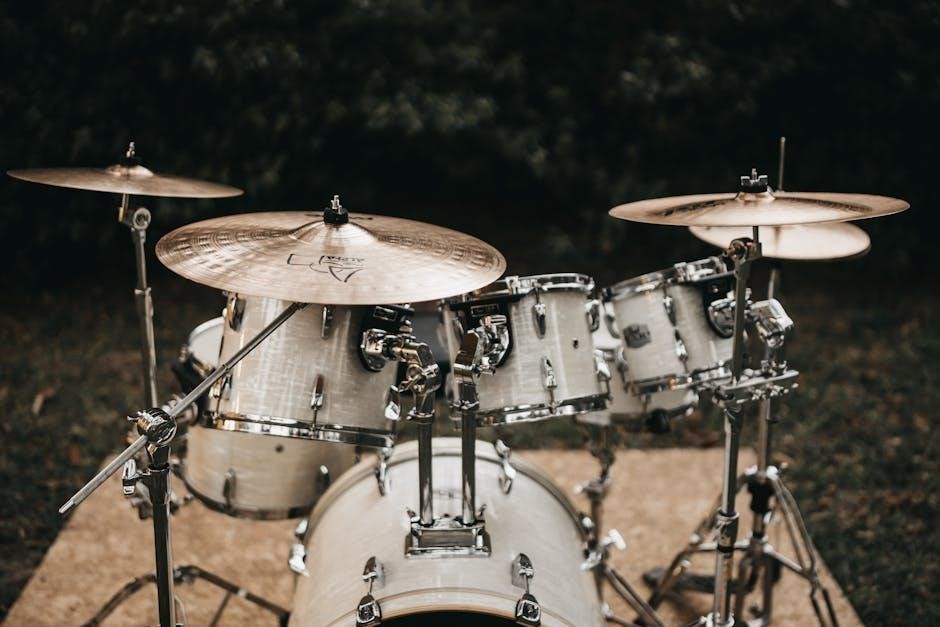
A drum kit‚ or drum set‚ is the foundation of modern rhythm sections. Typically‚ it comprises drums – the bass drum‚ snare drum‚ and tom-toms – alongside cymbals like the hi-hat‚ ride‚ and crash. These instruments work together to create diverse sounds and rhythmic patterns.
Drum kits aren’t static; they’re customizable! Drummers often adjust their setups based on genre and personal preference. Virtual drum sets mirror this‚ offering 23 parts for exploration. Whether acoustic or electronic‚ understanding each component is key to unlocking your drumming potential and mastering basic coordination.
Why Learn to Play the Drums?
Learning drums offers incredible benefits! It’s a fantastic creative outlet‚ boosting coordination‚ rhythm‚ and focus. Overcoming initial frustrations unlocks a rewarding musical journey. Virtual drumming provides accessible practice‚ even without a physical kit‚ aiding percussion understanding.
Drums are central to popular music and jazz‚ fostering teamwork and self-expression. Exploring different genres expands musical horizons. Online games and tutorials make learning fun and engaging‚ building a solid foundation in rhythm and music theory – a truly enriching experience!

Essential Drumming Equipment
Gear up for success! Choose between acoustic or electronic sets‚ select appropriate drumsticks‚ and prioritize a comfortable‚ well-positioned drum throne for optimal playing;
Acoustic vs. Electronic Drums
Acoustic drum kits offer a traditional feel and rich sound‚ ideal for developing natural dynamics and technique. However‚ they can be loud and require significant space. Electronic drums provide adjustable volume‚ headphone compatibility for quiet practice‚ and diverse built-in sounds.
Beginners often find electronic kits more accessible due to volume control and portability. Drum-tec specializes in both acoustic and electronic options‚ catering to all levels. Consider your living situation‚ budget‚ and desired sound when choosing. Both types offer a fantastic entry point into the world of drumming‚ with resources available for both!
Drumsticks: Types and Selection
Choosing the right drumsticks is crucial for comfort and control. Sticks vary in size‚ weight‚ and material – typically hickory‚ maple‚ or oak. Hickory is a popular all-around choice‚ offering durability and responsiveness. Maple is lighter‚ suitable for quieter playing‚ while oak provides a heavier feel;
Beginners often start with a 5A or 5B size‚ offering a good balance. Experiment to find what feels best in your hands! Drum-tec and Drums Only offer extensive selections. Consider the genre you’ll play; heavier sticks suit rock‚ lighter ones jazz. Proper grip and technique are key‚ regardless of stick choice.
Drum Throne and Positioning
A comfortable and properly adjusted drum throne is essential for good posture and preventing fatigue. Your throne height should allow your thighs to be roughly parallel to the floor‚ or slightly angled downwards. This promotes relaxed playing and efficient movement around the kit.
Ensure your back is straight‚ but not stiff. Adjust the throne’s tilt for added comfort. Drum-tec and Drums Only offer a variety of thrones. Proper positioning allows for easy reach of all drums and cymbals‚ maximizing control and minimizing strain during practice sessions.

Understanding Drum Notation
Decode rhythmic language! Learn to read basic rhythms‚ time signatures‚ and note values – crucial for interpreting drum music and progressing your skills.
Reading Basic Rhythm
Mastering rhythm is foundational. Begin by recognizing whole‚ half‚ quarter‚ and eighth notes – the building blocks of musical time. Understand how these note values relate to each other‚ determining the duration of each sound. Practice counting aloud while tapping rhythms to internalize the feel.
Focus on consistent tempo and accurate subdivisions. Utilize online resources and beginner PDFs to visually reinforce these concepts. Learning to read rhythm charts unlocks a world of musical possibilities‚ enabling you to play along with songs and collaborate with other musicians effectively.
Time Signatures Explained
Time signatures define the rhythmic framework. The top number indicates beats per measure‚ while the bottom number specifies the note value receiving one beat. Common time (4/4) means four quarter notes per measure. Understanding time signatures is crucial for accurately interpreting and performing drum patterns.
Explore different signatures like 3/4 or 6/8 to expand your rhythmic vocabulary. Beginner PDFs often illustrate these concepts visually. Practice counting measures and identifying strong/weak beats to solidify your grasp of time signatures and improve your rhythmic precision.
Note Values and Rests
Note values determine duration; whole‚ half‚ quarter‚ eighth‚ and sixteenth notes represent decreasing lengths. Rests indicate silence for corresponding durations. Mastering these is fundamental to reading drum notation and playing rhythms accurately.
Beginner PDFs often visually demonstrate note/rest relationships. Practice clapping or counting rhythms using different note values. Understanding rests is as important as playing notes – they create space and define the groove. Accurate timing relies on recognizing both sound and silence.

Basic Drumming Techniques
Develop proper grip and stroke techniques! PDFs emphasize matched or traditional grips‚ foot control‚ and consistent strokes for foundational drumming skills and coordination.
The Grip: Matched vs. Traditional
Mastering the grip is fundamental. Beginner PDFs detail two primary approaches: matched and traditional. Matched grip involves holding sticks symmetrically‚ offering power and control – ideal for rock and pop. Traditional grip‚ historically favored in jazz‚ utilizes a different hand position‚ demanding finesse and nuanced technique.
Choosing depends on style and comfort. Matched grip is often recommended for beginners due to its intuitive nature. Experiment with both! Proper grip minimizes tension‚ maximizing stick control and preventing fatigue. Resources highlight correct finger and wrist movements for each style‚ ensuring efficient and injury-free drumming.
Basic Stroke Techniques
Developing consistent strokes is key. Beginner drumming PDFs emphasize foundational techniques like the full stroke‚ down stroke‚ and tap stroke. The full stroke utilizes a wider motion‚ generating volume and power‚ while the down stroke focuses on downward movement for controlled accents.
The tap stroke‚ a subtle motion‚ produces quieter sounds. Mastering rebound is crucial – letting the stick bounce naturally conserves energy and improves speed. Practice exercises focusing on evenness and dynamics. Consistent practice builds muscle memory‚ leading to greater control and rhythmic precision on the drum kit.
Foot Technique: Bass Drum and Hi-Hat
Coordinated footwork unlocks rhythmic possibilities. Beginner drumming PDFs highlight heel-up and heel-down bass drum techniques. Heel-up provides power and speed‚ ideal for rock and energetic styles‚ while heel-down offers control and finesse for quieter passages.
Hi-hat control involves consistent opening and closing. Practice smooth transitions between open‚ closed‚ and chick sounds. Develop a relaxed ankle motion for endurance. Coordination exercises combining bass drum and hi-hat are essential. Consistent practice builds independence and rhythmic accuracy‚ forming the foundation of solid drumming.

Your First Drum Beat
Start simple! Learn a basic rock beat with beginner PDFs. Focus on coordination‚ using a metronome for timing‚ and building independence gradually.
Simple Rock Beat
Let’s create a foundational rock groove! Begin with the bass drum hitting on beats one and three. Simultaneously‚ the snare drum lands squarely on beats two and four‚ providing the backbeat. The hi-hat maintains a consistent eighth-note pattern throughout the measure‚ offering rhythmic drive.
Many beginner drumming PDFs illustrate this beat visually. Practice slowly‚ focusing on evenness and timing. Gradually increase the tempo as your coordination improves. This simple beat is the cornerstone of countless rock songs‚ offering a solid base for further exploration and development. Mastering this is key!
Basic Coordination Exercises
Develop independence with essential exercises! Start by alternating between the bass drum and snare drum‚ counting steadily. Next‚ add the hi-hat on every beat‚ creating a three-way coordination challenge. Many beginner drumming PDFs offer variations‚ like adding ghost notes or changing the hi-hat pattern.
Focus on maintaining a consistent tempo and even dynamics. These exercises build muscle memory and improve your ability to control multiple limbs simultaneously. Consistent practice‚ even for short periods‚ yields significant improvements in coordination and overall drumming skill.
Practicing with a Metronome
A metronome is your rhythmic foundation! Beginner drumming PDFs consistently emphasize its importance. Start slowly‚ matching the beat precisely. Gradually increase the tempo as your accuracy improves. Use the metronome for all exercises‚ including basic beats and coordination drills.
Experiment with different subdivisions – quarter notes‚ eighth notes‚ and sixteenth notes – to refine your internal clock. This builds a strong sense of timing and prevents rushing or dragging. Consistent metronome practice is crucial for developing solid rhythmic skills.
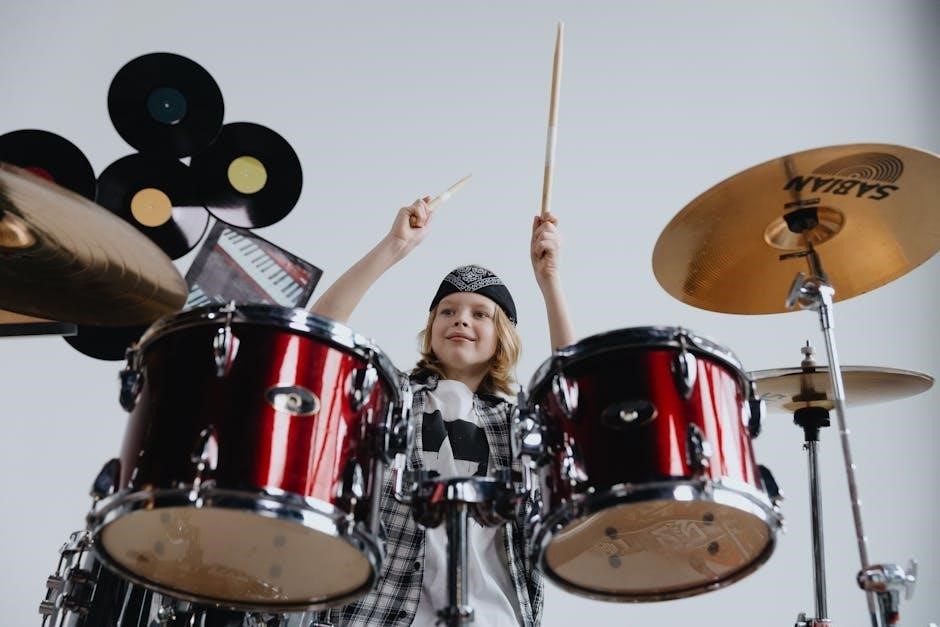
Developing Drumming Rudiments
Master essential patterns! Rudiments like single and double strokes‚ and paradiddles‚ build technique‚ speed‚ and control – foundational skills for any drummer.
Single Stroke Roll
The single stroke roll is the cornerstone of drumming technique. It involves alternating strokes – right‚ left‚ right‚ left – creating a consistent and even sound. Begin slowly‚ focusing on equal volume and spacing between each stroke.
Practice with a metronome to develop timing and precision. Gradually increase the tempo as your control improves. Focus on relaxation; tension hinders speed and fluidity.
Visualize the strokes and maintain a consistent grip. This fundamental rudiment builds hand strength‚ coordination‚ and endurance‚ serving as a building block for more complex patterns and fills. Consistent practice is key to mastering this essential skill.
Double Stroke Roll
The double stroke roll expands upon the single stroke‚ demanding greater control and finesse. Execute two strokes with each hand – RRLL‚ RRLL – maintaining evenness and clarity. This requires a rebound technique‚ allowing the stick to bounce naturally.
Start slowly‚ concentrating on consistent spacing and volume between each pair of strokes. A relaxed grip is crucial for achieving speed and fluidity.
Utilize a metronome to refine your timing and build endurance. Gradually increase tempo as proficiency grows. Mastering the double stroke roll unlocks a wider range of rhythmic possibilities and expressive techniques.
Paradiddle
The paradiddle is a foundational rudiment blending single and double strokes: RLRR LRLL. This combination creates a unique rhythmic texture and enhances coordination. Begin slowly‚ focusing on distinct articulation of each stroke. Ensure the double strokes are even and controlled‚ not rushed.
Practice variations – starting with the left hand (LRLL RLRR) – to develop ambidexterity.
Incorporate accents on different strokes to explore dynamic possibilities. The paradiddle serves as a building block for complex grooves and fills‚ improving overall drumming technique and musicality.
Advanced Drumming Concepts
Elevate your playing! Master dynamics‚ subtle ghost notes‚ and seamless fill-ins to add musicality and complexity to your drumming performance.
Dynamics and Control
Understanding dynamic range is crucial for expressive drumming. It’s not just about hitting the drums; it’s how you hit them. Explore playing softly for delicate passages and powerfully for impactful moments.
Control comes from consistent technique and focused practice. Experiment with varying stick heights and applying different amounts of pressure. Virtual drumming games can help visualize and internalize these concepts.
Pay attention to how dynamics affect the overall feel of the music. A skilled drummer uses dynamics to build tension‚ create contrast‚ and communicate emotion. Mastering this skill elevates your playing significantly.
Ghost Notes
Ghost notes are subtle‚ quiet strokes adding rhythmic complexity. They aren’t meant to be prominently heard‚ but felt – a textural element enriching the groove. Typically played on the snare drum‚ they sit between the main beats‚ creating a nuanced feel.
Beginners can practice by lightly brushing the snare with the stick‚ focusing on control and consistency. Experiment with different placements and velocities.
Mastering ghost notes requires a relaxed grip and a sensitive touch. They’re essential in genres like funk and jazz‚ adding depth and sophistication to your drumming.
Fill-Ins and Transitions
Fill-ins bridge sections of a song‚ adding excitement and variation. They’re short rhythmic phrases‚ often incorporating rudiments‚ that lead from one part to another. Start simple – a single stroke roll across the toms is a classic beginner fill.
Transitions should complement the music‚ not overpower it. Focus on smooth connections and dynamic control. Experiment with different combinations of drums and cymbals.
Listen to your favorite drummers and analyze their fills. Gradually incorporate new ideas into your playing‚ building a vocabulary of rhythmic phrases.

Resources for Learning
Discover a wealth of online tools! Games‚ tutorials‚ and downloadable PDF lessons offer accessible learning. Mobile apps enhance practice anytime‚ anywhere.
Online Drumming Games and Tutorials
Immerse yourself in interactive learning! Numerous websites provide free drumming games‚ optimized for mobile devices‚ making practice fun and accessible. These platforms often feature virtual drum kits with 23 parts‚ allowing exploration of instrument layouts.
Tutorials demonstrate techniques‚ from basic rhythms to complex patterns. Virtual drumming using a computer keyboard is a great starting point. Beyond entertainment‚ these resources aid in understanding percussion‚ rhythm‚ and even music theory‚ offering a comprehensive introduction for aspiring drummers.
PDF Drum Lessons for Beginners
Unlock structured learning with downloadable resources! Many websites offer free PDF drum lessons specifically designed for beginners; These lessons often provide a step-by-step approach‚ covering fundamental techniques like grip‚ basic strokes‚ and foot control.
PDFs allow offline access and focused study‚ complementing online games and tutorials. They frequently include exercises to build coordination and independence‚ helping overcome initial frustrations. Look for lessons that introduce notation and rhythm basics‚ laying a solid foundation for future progress.
Drumming Apps for Mobile Devices
Practice on the go with convenient mobile apps! Numerous drumming applications are available for smartphones and tablets‚ offering interactive lessons and virtual drum kits. These apps often feature built-in metronomes and recording capabilities‚ aiding in timing and self-assessment.
Many apps simulate realistic drum sounds and provide lessons covering basic techniques and rhythms. Some even offer game-like challenges to make learning fun and engaging. They’re perfect for supplementing PDF lessons and reinforcing concepts while traveling or during downtime.
Maintaining Your Drum Kit
Keep your kit in top shape! Regular tuning‚ cymbal cleaning‚ and hardware checks ensure optimal sound and longevity for your drumming experience.
Drumhead Tuning
Achieving the perfect drum sound relies heavily on proper drumhead tuning. It’s a skill that takes practice‚ but significantly impacts your kit’s resonance and overall tone. Start by ensuring even tension across the head using a drum key‚ moving in a star pattern.
Listen carefully as you tighten each lug – aim for similar pitch across all lugs on a single head. Different tunings create diverse sounds; higher tension yields a brighter‚ more articulate tone‚ while lower tension produces a warmer‚ deeper resonance. Experiment to find what suits your musical style!
Cymbal Care
Cymbals‚ delicate instruments‚ require careful handling and maintenance to preserve their brilliance and sustain. Always lift cymbals by the edge or bell‚ avoiding contact with the playing surface to prevent fingerprint smudges that can dull the sound.
Regularly wipe down cymbals with a specialized cymbal cleaner to remove dirt and oxidation. Store them properly‚ using cymbal bags or stands with felt washers to prevent scratches and unwanted vibrations. Avoid over-tightening the cymbal felts‚ allowing for natural movement and resonance.
Hardware Maintenance
Drum hardware‚ the backbone of your kit‚ demands routine checks for optimal performance and longevity. Regularly tighten all screws and bolts on stands‚ pedals‚ and mounting systems to prevent wobbling and ensure stability during playing. Lubricate moving parts‚ like pedal hinges and throne swivels‚ with silicone-based lubricant.
Clean metal surfaces with a damp cloth to remove dust and grime. Inspect rubber feet for wear and tear‚ replacing them as needed to maintain grip and prevent scratching of floors. Proper hardware care ensures a safe and enjoyable drumming experience.
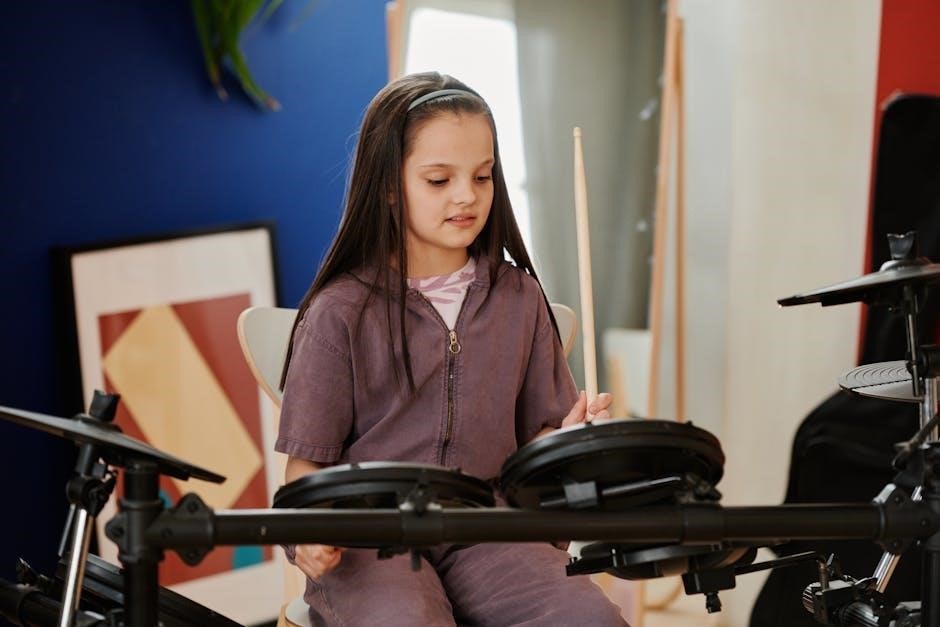
Exploring Different Drumming Genres
Dive into diverse styles! From rock’s power to jazz’s finesse and Latin rhythms‚ each genre offers unique challenges and exciting new drumming techniques to master.
Rock Drumming
Rock drumming emphasizes powerful‚ driving rhythms and often features prominent cymbal work. Beginners should focus on mastering solid backbeats – typically snare on beats two and four – alongside consistent bass drum patterns.
Developing stamina is crucial‚ as rock often demands energetic and sustained playing. Explore simple rock beats‚ incorporating hi-hat variations and basic fills.
Listen to iconic rock drummers to internalize the feel and nuances of the genre. Experiment with dynamics‚ adding intensity during choruses and creating contrast in verses. Don’t be afraid to explore harder rock styles with more complex cymbal arrangements!
Jazz Drumming
Jazz drumming prioritizes improvisation‚ swing feel‚ and interaction with other musicians. Beginners should concentrate on developing a relaxed‚ fluid groove and mastering the ride cymbal pattern – the foundation of most jazz beats.
Focus on subtle dynamics and ghost notes on the snare drum to create rhythmic interest. Learning to comp – providing rhythmic accompaniment – is essential.
Listen extensively to jazz drummers‚ paying attention to their phrasing and use of space. Explore different jazz styles‚ from swing to bebop‚ and practice playing along with recordings to internalize the feel;
Latin Drumming
Latin drumming encompasses a diverse range of styles‚ each with unique rhythmic patterns and instrumentation. Beginners should start with foundational rhythms like the clave – a fundamental building block in many Latin genres.
Focus on developing precision and coordination to execute complex polyrhythms. Explore rhythms from Cuba (son‚ rumba)‚ Brazil (samba‚ bossa nova)‚ and other Latin American countries.
Learn to incorporate percussion instruments like congas‚ timbales‚ and bongos into your playing. Listening to authentic Latin music is crucial for understanding the nuances and feel of these styles.
Finding a Drum Teacher
Personalized lessons accelerate progress! Seek experienced instructors offering tailored guidance‚ constructive feedback‚ and a structured learning path for optimal drumming development.
Benefits of Private Lessons
Individualized attention is paramount. Private drumming lessons offer a customized learning experience‚ addressing your specific needs and goals directly. A skilled instructor provides real-time feedback‚ correcting technique and preventing bad habits from forming early on. This focused approach accelerates progress far beyond self-teaching or group classes.
Furthermore‚ a teacher can tailor lessons to your musical preferences‚ motivating you with songs and styles you enjoy. They’ll also introduce essential music theory concepts relevant to drumming‚ fostering a deeper understanding of rhythm and timing. Overcoming frustration becomes easier with expert guidance‚ building confidence and a solid foundation.
What to Look for in a Teacher
Seek experience and a positive rapport. A qualified instructor should possess demonstrable drumming proficiency and a proven track record of successful students. Look for someone patient‚ encouraging‚ and able to explain concepts clearly. Consider their teaching style – does it align with your learning preferences?
Inquire about their experience teaching beginners specifically. A good teacher will assess your current skill level and create a personalized learning plan. Don’t hesitate to ask about their musical background and the genres they specialize in. Ultimately‚ find someone who inspires you and makes learning fun!

Drumming and Music Theory
Understand rhythm’s core! Music theory unlocks deeper drumming comprehension‚ revealing how rhythm and meter intertwine to create compelling and musically rich performances.
Understanding Rhythm and Meter
Rhythm forms the heartbeat of music‚ while meter organizes beats into predictable patterns. Grasping these concepts is crucial for any aspiring drummer. Time signatures‚ like 4/4‚ dictate how many beats reside within each measure‚ and what note value receives one beat.
Beginners often struggle with subdividing beats – feeling the smaller rhythmic units within each beat. Practice counting and clapping different rhythmic values (whole‚ half‚ quarter‚ eighth notes) to internalize these divisions.
Understanding rests is equally vital; silence is a powerful rhythmic element! Developing a strong internal clock‚ aided by a metronome‚ will solidify your rhythmic foundation and improve your overall timing.
Applying Music Theory to Drumming
Music theory isn’t just for melody and harmony; it profoundly impacts drumming. Understanding scales and chords allows drummers to anticipate harmonic changes and create supportive grooves. Knowing key signatures helps predict rhythmic patterns and fills that complement the song’s structure.
Analyzing song forms (verse‚ chorus‚ bridge) enables drummers to build dynamic arrangements.
Even basic chord progressions can inspire rhythmic ideas. For example‚ a minor chord might suggest a darker‚ more subdued groove. Applying theoretical knowledge elevates drumming beyond simply keeping time‚ transforming it into a creative and integral part of the musical landscape.